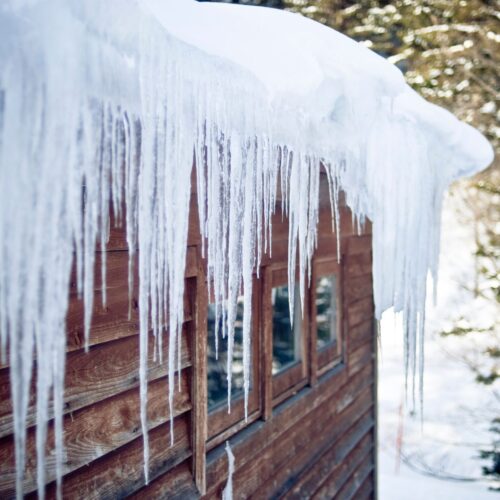
 Ice dams are a common winter problem for homeowners and businesses across Boulder County and the Denver Metro Area. When snow melts and refreezes along the edges of your roof, it can create thick ridges of ice that trap water and lead to leaks, damaged gutters, and costly repairs.
Knowing the early warning signs can help you catch the problem before it causes serious damage. If you notice changes on your roof during the winter, it may be a sign that ice dams are beginning to form.
What Are Ice Dams?
Ice dams form when heat escaping from the attic melts snow on the upper portions of a roof. As the melted water flows downward, it reaches the colder roof edge and refreezes. Over time, this creates a ridge of ice along the eaves.
Once this ridge forms, additional melting snow cannot drain properly. Water becomes trapped behind the ice and may work its way under shingles and into the home. This can lead to roof leaks, insulation damage, mold growth, and structural issues if not addressed quickly.
Ice dams are especially common in climates like Colorado where daytime snowmelt and nighttime freezing occur repeatedly throughout the winter.
Common Signs of Ice Dams Forming
1. Icicles Hanging from the Roof
Large icicles hanging from the edge of your roof may look scenic, but they often signal an ice dam problem. Icicles form when water flows over the roof edge and freezes as temperatures drop. While small icicles can occur naturally, large clusters usually indicate that snow is melting higher up on the roof and refreezing near the eaves.
In addition to signaling ice dams, heavy icicles can also become a safety hazard for people, pets, and landscaping below.
2. Water Stains on Ceilings or Walls
Water stains or discoloration on ceilings and walls are a strong warning sign that water is entering your home. When ice dams block drainage, melted snow can back up under shingles and seep into the roof structure.
This moisture can travel through insulation and drywall before becoming visible indoors. If left unresolved, it may lead to mold growth, wood rot, and costly interior repairs.
3. Uneven Snow Melt Patterns on the Roof
Take a look at your roof after snowfall. If certain areas melt quickly while others remain snow covered, heat may be escaping through the attic. This uneven snow melt is one of the most common contributors to ice dam formation.
Warm roof surfaces melt snow near the peak, while colder areas near the roof edge allow the water to refreeze. Over time, this cycle creates the ice ridge that blocks proper drainage.
4. Ice or Overflowing Water in Gutters
Gutters filled with ice or packed snow can worsen ice dam problems. When gutters freeze, they restrict proper drainage from the roof and allow water to pool near the eaves.
While gutters do not cause ice dams directly, frozen gutters can contribute to water backing up under roofing materials once a dam begins to form.
5. Roof Leaks or Dripping Water
One of the most serious warning signs of ice dams is water leaking into the home. Dripping water, wet insulation, or moisture around windows and exterior walls may indicate that trapped water is forcing its way beneath shingles.
If you notice active leaks during winter, it is important to address the problem quickly before structural damage occurs.
Why Trust Black Roofing & Waterproofing?
With decades of expertise serving Boulder County and the Denver Metro Area, Black Roofing & Waterproofing specializes in identifying and resolving roofing issues, including ice dams. Our experienced team understands how Colorado’s winter weather impacts roofing systems and can help diagnose insulation, ventilation, or drainage issues contributing to ice buildup.
Whether residential or commercial, we offer roof assessments and maintenance services tailored to local weather conditions.
FAQs
What Causes Ice Dams to Form?
Ice dams typically form when warm air escapes into the attic and heats the roof surface. This melts snow, which refreezes near the colder roof edges, eventually creating a barrier of ice that traps water.
How Can Ice Dams Damage My Home?
Ice dams can cause water leaks, damaged insulation, mold growth, rotting roof decking, gutter damage, and interior ceiling stains if water backs up under shingles.
Can I Prevent Ice Dams?
Yes. Improving attic insulation, ensuring proper roof ventilation, and maintaining gutters can significantly reduce the risk of ice dams forming.
What’s the Best Time to Schedule a Roof Assessment?
Late fall is the ideal time to schedule a roof assessment so potential insulation or ventilation issues can be addressed before winter weather arrives.
Do Ice Dams Form on Every Roof?
Ice dams are most common on roofs with poor insulation or ventilation. Sloped roofs with significant snow accumulation are particularly vulnerable, especially in regions with frequent freeze-thaw cycles like Colorado.